

27 Mar 2026
The Cost of Poor CAD Standards in Construction Drawings
Construction drawings are the primary communication medium between the architects, engineers, contractors and project stakeholders. Every dimension, annotation, layer and symbol in a drawing carries critical information that determines how a structure will be built. However, many firms still depends on the outdated CAD standards, legacy templates or inconsistent drafting practices. While these issues may appear minor at first glance, they can introduce significant risks throughout the project lifecycle—from design coordination to on-site construction.
As construction projects grow more complex and digitally integrated, outdated CAD standards can silently undermine accuracy, collaboration and compliance. Understanding these risks is essential for any organization delivering professional Construction Drawing Services or operating as a modern Drafting Company.
The Role of CAD Standards in Construction Documentation
CAD standards defines how the drawings are structured, organized and presented. They establish consistent rules for:
- Layer naming and hierarchy
- Line types and line weights
- Dimensioning and annotation styles
- Symbol libraries and drawing templates
- Revision tracking and version control
When these standards are current and properly implemented, they ensure that every stakeholder interprets the drawings in the same way. However, when the standards become outdated, inconsistencies begin to appear across the drawing sets, increasing the risk of misinterpretation and construction errors.
1. Increased Risk of Construction Errors
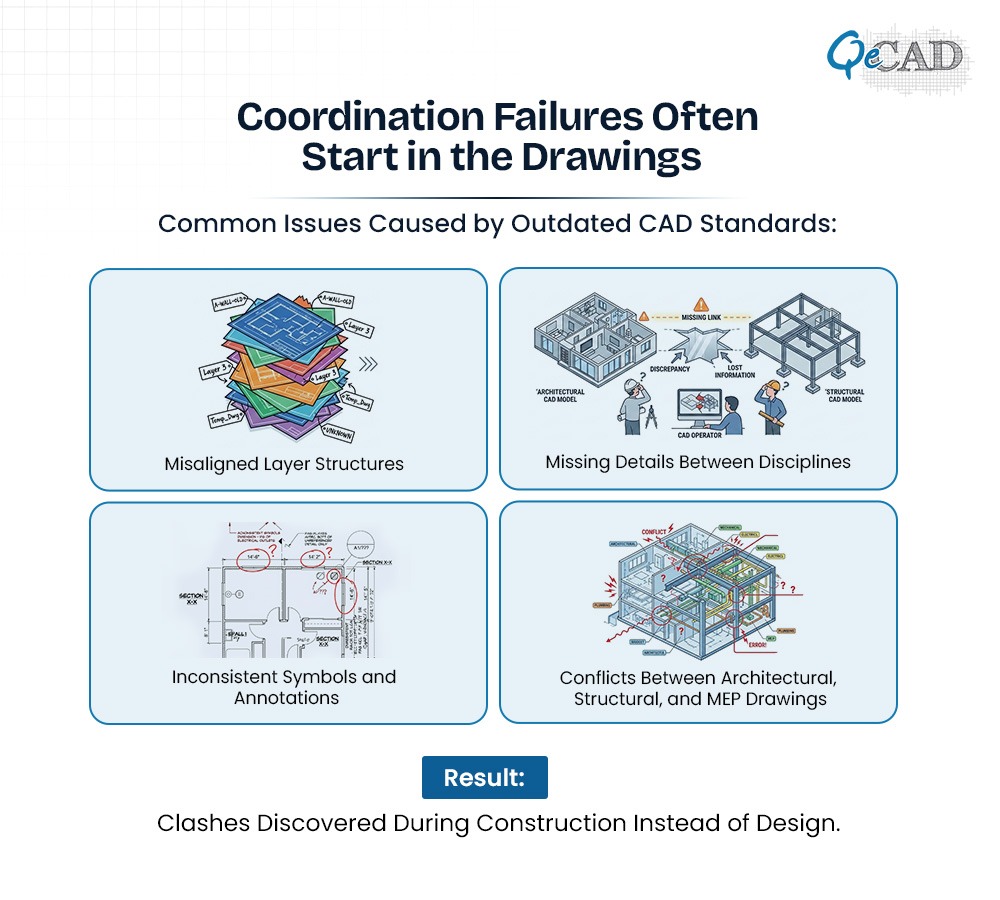
Outdated CAD standards often lead to inconsistent symbols, annotations and layer structures across different drawing sheets. When contractors or engineers interpret these drawings with inconsistent formatting, the risk of miscommunication increases significantly.
For example:
- Structural elements may appear on incorrect layers
- Dimension styles may vary between sheets
- Symbols may not match the legend or project documentation
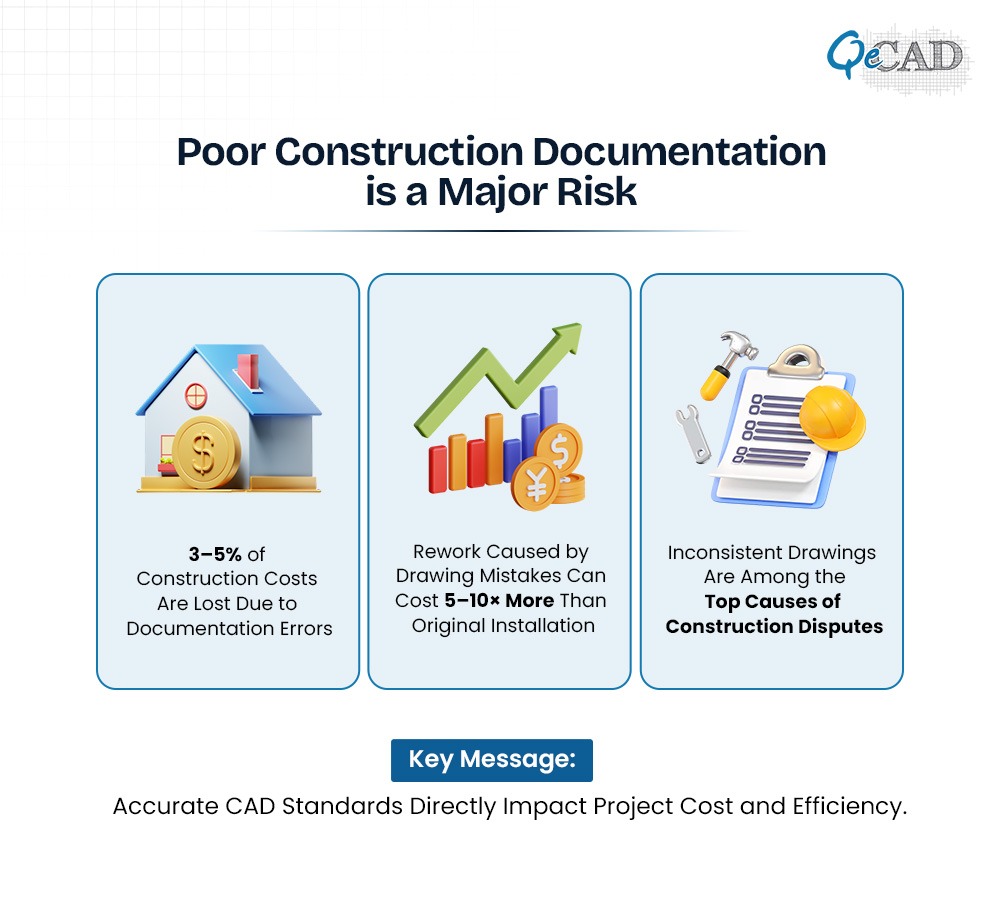
Even small drafting inconsistencies can lead to major consequences during the construction. Studies shows that inaccuracies in construction documentation contributes to 3–5% of total project costs in dispute resolution and corrections.
Furthermore, dimensional discrepancies or incorrect details in drawings have historically resulted in the structural failures, foundation settlements and costly redesigns in major projects.
In high-value construction projects, even a minor drafting error can trigger a chain reaction affecting the structural calculations, material procurement and installation sequences.
2. Costly Rework and Project Delays
One of the most significant risks of outdated CAD standards is the increased likelihood of reworks. When outdated templates or revisions are used, contractors may unknowingly build from obsolete information.
Research in construction documentation indicates that the rework caused by the drawing errors can cost five to ten times more than the original installation work, often leading to the schedule delays that extends the projects by months or even years.
Common scenarios includes:
- Incorrect structural dimensions requiring demolition and reconstruction
- Conflicts between the architectural and MEP layouts
- Missing construction details that requires on-site redesign
These problems not only impacts the costs but even damages the client trust and project’s profitability.
3. Coordination Failures Between Disciplines
Modern construction projects involve multiple disciplines working simultaneously—architecture, structural engineering, mechanical systems, electrical layouts and plumbing infrastructure. Effective coordination between these disciplines depends heavily on the consistent drawing standards.
Outdated CAD frameworks often lack standardized layering systems or naming conventions, which leads to confusion during coordination and review processes. Poor coordination between architectural, structural and MEP drawings is one of the major causes of the construction delays.
For example:
- Structural columns may conflict with the HVAC ducts
- Electrical conduits may clash with the plumbing systems
- Mechanical rooms may not align with the architectural layouts
These coordination failures often surface during the construction rather than during the design—when they are far more expensive to resolve.
4. Compliance and Regulatory Risks
Building codes, construction regulations and documentation standards are continuously evolving. Outdated CAD standards may fail to align with current regulatory requirements, creating compliance risks.
For instance:
- Updated fire safety provisions may not be reflected in the legacy templates
- Revised structural detailing requirements may be missing
- Code-compliant annotations and documentation formats may be absent
When drawings do not meet the regulatory standards, projects may face:
- Delayed permit approvals
- Failed inspections
- Mandatory redesigns
In large infrastructure or public-sector projects, such non-compliance can lead to severe financial penalties or contractual disputes.
5. Inefficient Workflows and Productivity Loss
Outdated CAD standards often force teams to rely on manual corrections and workarounds. Instead of working within a streamlined drafting system, teams may spend hours:
- Reorganizing layers
- Fixing dimension styles
- Correcting annotation inconsistencies
- Rebuilding outdated drawing blocks
Such inefficiencies delays the project timelines and significantly increases the risk of human errors.
Modern drafting workflows rely on the structured digital standards that supports automation, standardized libraries and integration with the advanced modeling platforms. Without updated CAD standards, firms juggles to keep sync with industry expectations.
6. Increased Legal and Contractual Liability
Construction drawings are not just design documents—they are contractual records. Any inaccuracies or inconsistencies within these documents can increase an organization’s exposure to legal liability.
If outdated CAD standards contributes to errors in:
- Structural detailing
- Material specifications
- Construction sequencing
the resulting disputes can escalate into legal claims. Documentation errors often trigger costly litigation, with disputes sometimes lasting years after project completion.
For engineering and architectural firms, this risk highlights the importance of maintaining precise and updated drafting standards.
7. Material Waste and Sustainability Impacts
Another overlooked consequence of outdated CAD standards is increased material waste. When construction drawings contains errors or inconsistencies, contractors may procure incorrect materials or fabricate components that cannot be used.
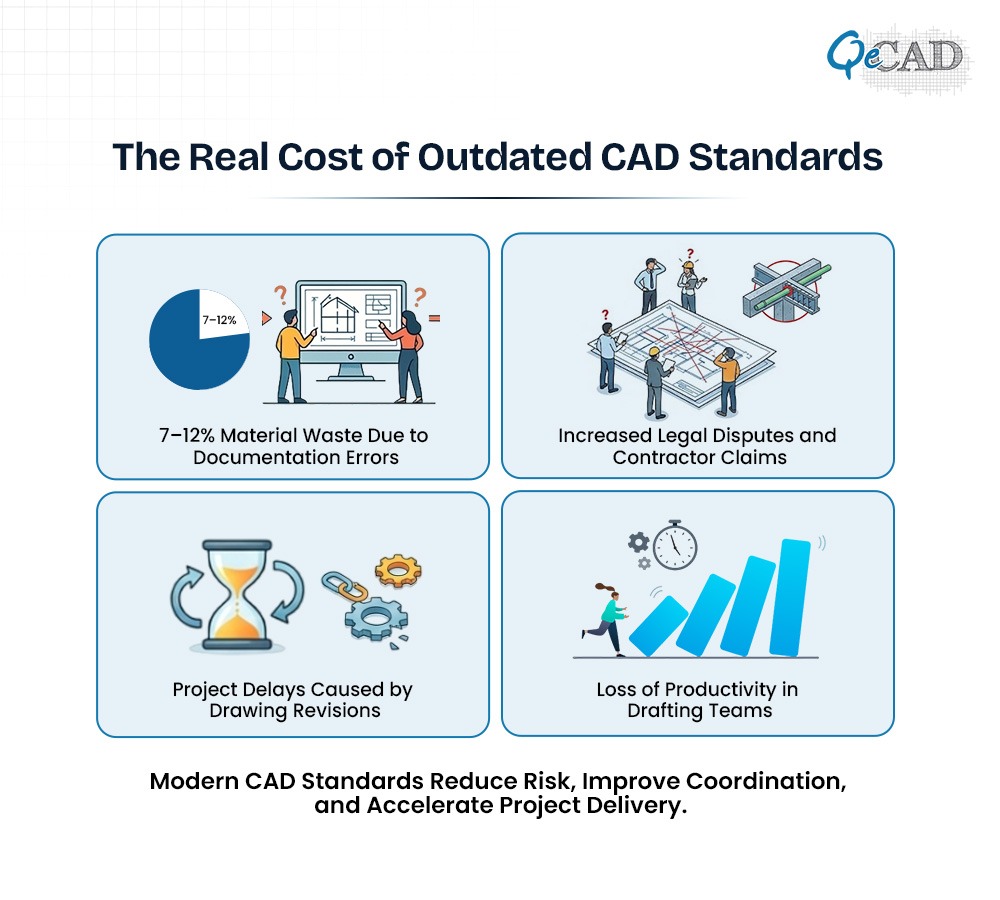
Research indicates that inaccuracies in construction drawings can contribute to 7–12% of total construction material waste.
Beyond financial losses, this waste has significant environmental implications, especially in the projects targeting sustainable construction certifications.
Best Practices to Avoid These Risks
To minimize the risks associated with the outdated CAD standards, organizations should implement structured drafting practices, including:
1. Standardized CAD Templates
Maintain updated templates aligned with the current project requirements and industry standards.
2. Version Control Systems
Ensures consistency by allowing all stakeholders to work from the most current drawing revisions.
3. Cross-Discipline Coordination Reviews
Regular coordination meetings between the architectural, structural and MEP teams.
4. Quality Assurance and QA/QC Processes
Implement structured review protocols before issuing the construction drawings.
5. Continuous Standard Updates
Regularly update the CAD standards to align with the evolving industry practices, regulations and technologies.
Conclusion
Outdated CAD standards may seem like a minor operational issue, but their impact on the construction projects can be profound. From the construction errors and reworks to the regulatory failures and legal disputes, the risks extend far beyond the drafting inefficiencies.
In today’s complex construction environment, accurate and standardized documentation is critical to project’s success. Organizations that invest in the modern drafting standards and professional documentation workflows significantly reduces the project risks while improving the coordination, efficiency and build quality. For firms delivering professional the Construction Drawing Services, maintaining updated CAD standards is no longer optional—it is a strategic requirement. A forward-thinking Drafting Company understands that the precision in documentation directly translates into safer, faster and more cost-effective construction outcomes.